
.svg)
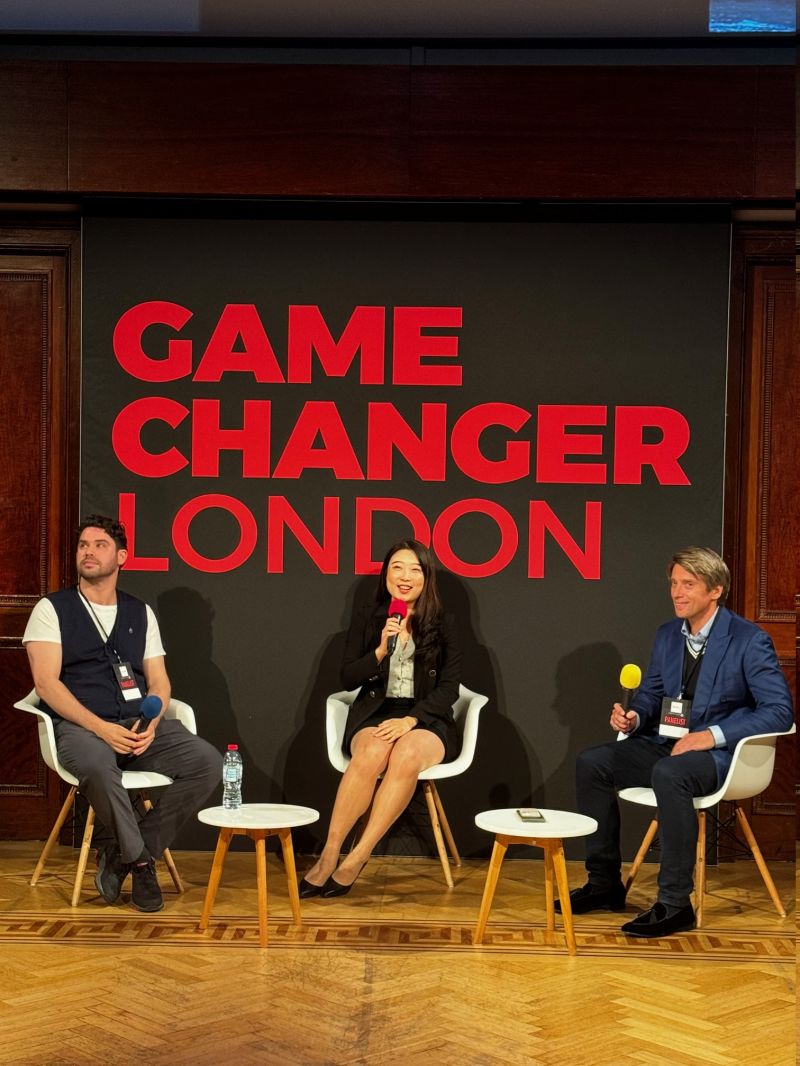
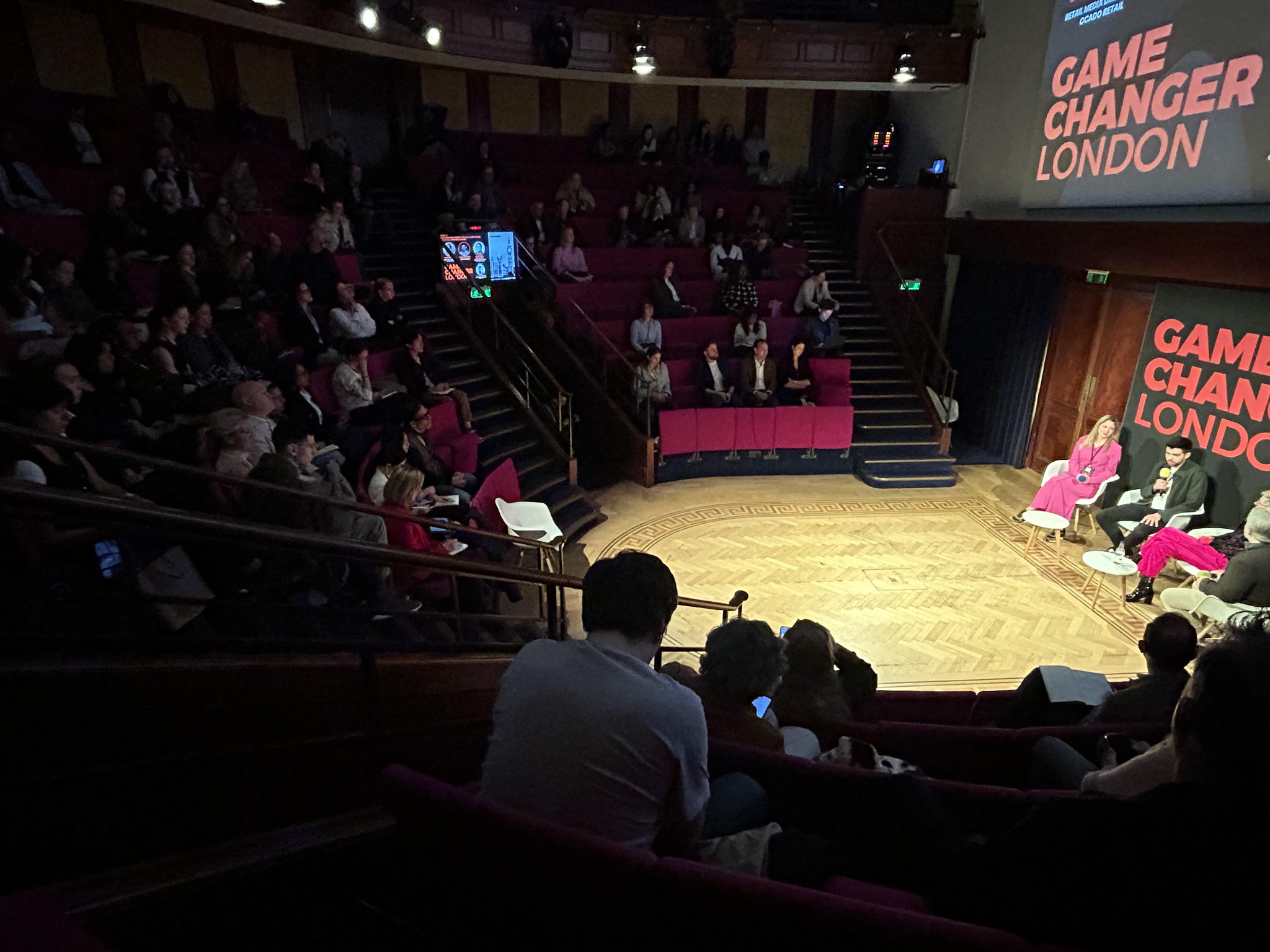
Last week, 350 leaders, researchers and operators packed into the Royal Institution of Great Britain for the second edition of Game Changer London.
Across a single day, the conference moved through impact investing, retail personalisation, media psychology, AI transformation, luxury, and startup behaviour.
The big takeaway was that trust isn't a soft skill anymore. It's becoming the infrastructure that decides which businesses get built, funded, and bought in the next decade. That now has direct implications for how agency founders should be thinking about the next 18 months.
Here's what was noteworthy:
It’s a matter of trust
Dr. Vanja Ljevar opened the day with one line that did most of the work: "It's a matter of trust."
In a world where algorithms make more of the calls, trust stops being an emotional concept and becomes structural. A system without it doesn't hold, no matter how clever the technology underneath.
For agencies, this is harder than it looks at first. The agency model has always run on trust between founder and client, founder and team, founder and acquirer. What changes now is that trust has to be visible to systems, not just people. Your reputation isn't just what clients say at industry dinners. It's what LLMs cite when someone asks them about you.
We've written about this before,, but Game Changer London put a sharper edge on it. The agencies that win the next cycle are the ones building trust into the architecture of how they operate, not just into the relationships they maintain.
The AI enablement disguise
The one session we'd ask for every agency founder to revisit is “The Illusion of Readiness: Why AI Transformation Is Harder Than It Looks”, delivered with SmartCat.io.
The panel took apart the corporate myth that most organisations are AI-ready. They aren't. They've bought the tools, run the workshops, updated the website. None of that is the same as being structurally ready to operate differently.
The same pattern shows up in agencies. Founders tell us they're "AI-enabled" because they're using Claude and ChatGPT in delivery. That's tool adoption, not transformation. Transformation is when the business model itself shifts, when pricing moves off hours, when client conversations stop being about capability and start being about outcomes.
The event made one thing explicitly clear, “the illusion of readiness is much more expensive than it looks”.
The investment shift
The Future of Impact Investing panel, with Joseph Tenzin Oliver and Samir Beg Ceric, raised something specific to how capital is moving.
Return on investment used to mean profit. Increasingly, capital is being deployed against systems that optimise for profit and social impact simultaneously. That changes which businesses get funded, which get acquired, and which get left behind.
For agencies considering an exit in the next three to five years, this matters more than the headlines suggest. The buyer pool is shifting. The questions acquirers ask have changed. A founder thinking about valuation purely in EBITDA multiples is operating with an outdated map.
The agencies that exit well in the next cycle are the ones that can articulate impact alongside revenue.
The attention economy
The Future of Media panel, with Patrick Fagan, Lea Karam and Meropi Kylika, made one point that's hard to unhear.
AI doesn't just distribute content anymore. It actively shapes emotional response and attention patterns at scale. The systems are now in the loop of how people feel about what they read, watch, and buy.
For agencies running content or paid media for clients, this is the ground shifting underneath the work. Performance metrics that worked five years ago don't capture what's happening now. Attention is being engineered upstream of the channels you're optimising. If your reporting still treats reach and engagement as the primary signals, you're measuring the wrong layer.
The agencies that win on the media side over the next 18 months are the ones building strategies around behavioural patterns, not just channel performance. The ones still selling "content packages" are selling a commodity.
The startup logic
The closing panel, Building in the Age of AI, with Jo Living, Josh Robson and Vaida S., had the line that summed up the day.
Speed is no longer the advantage. Understanding behaviour in real time is.
That's a hard pivot for a generation of founders who built their playbooks around moving fast. Speed alone is now table stakes. Everyone has fast tools. The advantage has moved to whoever can read what's actually happening, in the market and inside their own business, and respond with precision.
For agency founders, this maps directly to the operating system problem we talk about constantly. Founders running on intuition can't read their own businesses in real time. The agencies that can are the ones with dashboards, documented playbooks, and leadership teams who can interpret signal without the founder in the room.
Speed of action used to be the moat. Quality of interpretation is the moat now.

The Unusual take
Game Changer London made one thing clear. The conversation about AI has moved far past the question of whether it's coming. It's now the operating environment, not just a feature.
What's still being decided is who builds the systems of trust on top of that environment. Which businesses earn the right to operate at premium rates. Which agencies acquirers want to buy.
The founders we work with across the collective are all working through the same question right now. How do you build something that holds up in a market where the underlying architecture changes every quarter? The answer isn't faster tools. It's stronger systems, sharper positioning, and a clearer point of view on the world your clients are operating in.
If any of this lands for you, that's the work we do alongside agency founders. Book a call and we'll talk through where your business sits against the shifts Game Changer London surfaced, and what 18 months of focused work could look like.
Unusual Group was a proud partner of Game Changer London 2026.
.jpg)

.jpg)