
.svg)

Social media isn't just a digital playground anymore; it’s infrastructure. It’s where we vet companies, discover products, and decide where to send our resumes. But there’s a plot twist: the most powerful voices aren't coming from high-budget marketing departments or paid mega-celebrities.
They’re coming from the desk next to you.
Welcome to the era of Employee-Generated Content (EGC), the unfiltered, human-centric shift that’s turning "cubicle life" into a massive marketing engine.
What exactly is EGC?
In short: it’s content created by employees about their professional lives.
Think:
- Instagram/TikTok: A barista’s chaotic morning rush or a designer's messy workspace.
- LinkedIn/Substack: A deep dive into a project’s "failure" and what was learned.
While corporate content builds authority, EGC builds trust.
And in 2026, trust is the only currency that matters.
The Power of the People (By the Numbers)
Why are brands pivoting away from polished logos and toward real people? The data tells a compelling story:
Metric
The Impact of EGC
Trust Factor
76% of individuals say they trust content shared by "normal" people more than brands.
Reach
Content shared by employees gets 8x more engagement than content shared by brand channels.
Recruitment
Candidates are 3x more likely to trust an employee’s word on culture than the CEO's.
Sales
Leads developed through employee social advocacy convert 7x more frequently.
The Rise of the “Rogue” Account
We’re seeing a fascinating evolution: the "Secondary Brand Account." Brands like Dunkin’, Monzo, Arby’s, and Duolingo are leaning into accounts that feel like an employee "took over" the password.
They are:
- Reactive: Jumping on micro-trends in hours, not weeks.
- Messy: Scrappy, handheld video that fits perfectly into a TikTok feed.
- Authentic: They prioritise internet culture over corporate jargon.
From Fenty Beauty featuring their IT team to Loewe showing artisans at work, the takeaway is clear: Every level of the company is now a content creator.
Our personal favourite?
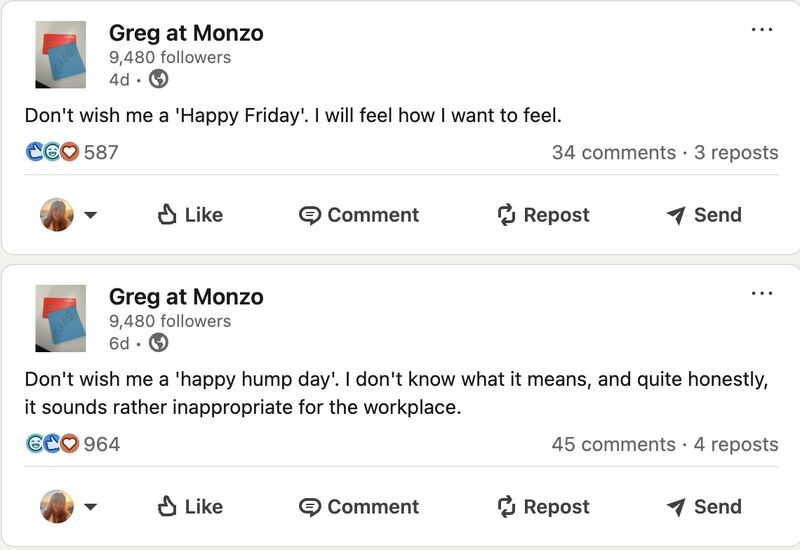
Greg at Monzo: This character (created by Monzo’s social team) acts as a grumpy, anti-marketing employee who complains about meetings and office microwaves. He gained 10,000+ followers in one week by being the human voice of the digital bank.
What’s In It for the Employee?
- Visibility: You aren't just a name on an org chart; you’re a thought leader.
- Networking: Sharing your process attracts mentors, peers, and future opportunities.
- Personal Brand: In an AI-driven world, your unique human perspective is your best job security.
Encouraging your team to get started…
- Focus on Value: Don't just show your coffee. Share a tip, a lesson learned, or a "hack" that makes your job easier.
- Start small: You don’t need a strategy—just a starting point. Share moments that feel natural.
- Keep it Human: Perfection is boring. Relatability is what makes people stop scrolling.
- Stay Voluntary: EGC only works if it’s real. If it’s forced by HR, the audience will smell the insincerity from a mile away.
- Experiment with formats: Short-form video (especially on TikTok and Instagram) is currently driving the highest reach.
For companies, this means rethinking their content strategies. For employees, it means new opportunities to be seen and heard. And for agencies and marketing teams, it brings about a time of exploration and experimentation. Right now, the most valuable brand ambassador might not be a celebrity or a top athlete. Look around, they might already be sitting in your office.
.jpg)

.jpg)