
.svg)
Unusual only officially launched at the start of October. That matters because we’re early, but more importantly, because the launch wasn’t the start of the work. It was the moment we put a name, a model, and a structure around something we’d already been doing with founders who wanted to scale properly, not just loudly.
This is a quick download on where we are, who’s around your table now, and why we’re being so deliberate about what comes next.
We built Unusual for founders
Most agencies follow the same pattern:
They grow.
They hit glass ceilings.
They bolt more services and processes onto a messy core.
They end up bigger, and strangely more fragile.
That was painful before AI, but it’s brutal now. Delivery models are shifting, talent expectations are changing, and buyers are more selective about which agencies they’ll pay a premium for.
Unusual exists for the founders who want to play a different game:
Not just scale: healthy scale.
Not just revenue: strong margin.
Not just a founder-led engine: a business that can outlive the founder.
If you’re growing but margins are thin, you don’t need more hustle; you need infrastructure.
If everything still depends on you, you don’t yet have a business you can sell.
That’s the problem Unusual is built to solve.
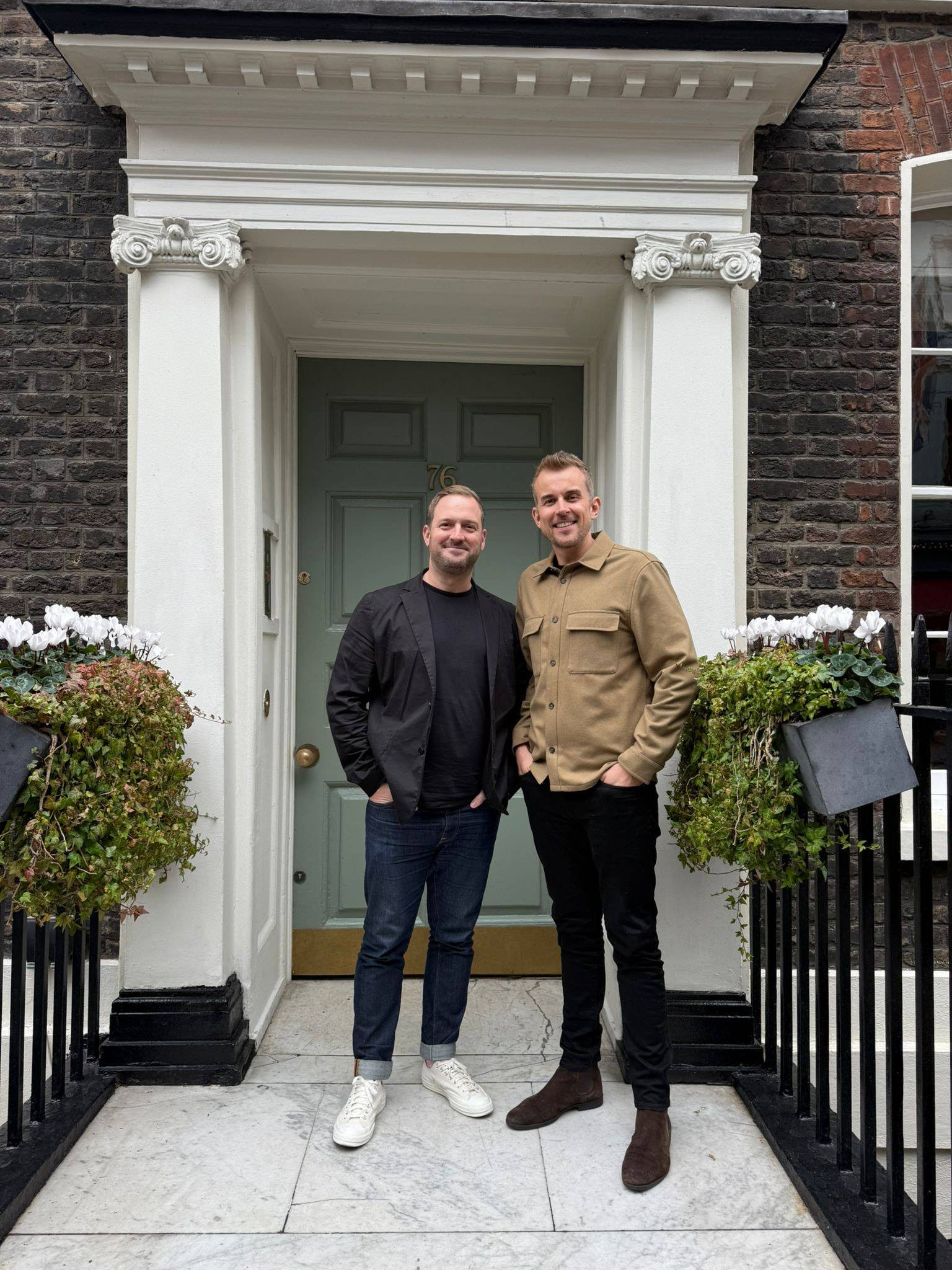
The collective so far: 12 members
Since October, 12 member agencies have joined the collective, with 3 new members onboarding in February.
This first cohort matters more than people realise. It sets the standard for what Unusual is meant to be: a curated group of high-performance, high-potential agencies where the quality of the room is the asset.
We’re deliberately onboarding 15-20 agencies per year, handpicked and carefully evaluated. We say “no” more than we say “yes”, not to manufacture exclusivity, but because the model only works if the bar stays high.
If you want a badge, Unusual is not for you.
If you want infrastructure, operating discipline and a repeatable path to scale and eventually exit, we might be.
The board behind the model
Alongside the partner agencies, we’ve built a board of operators whose entire job is to make your business more buyable.
I’m part of that board too, so let me introduce us properly:
Luke: Founder & CEO
I sit at the intersection of agency growth, M&A and performance under pressure. I’ve built and exited my own agencies, advised founders through deals, and now spend my time helping independents become the kind of businesses buyers actually want to own. My job is to keep the whole system honest: no vanity metrics, no shiny-object strategy, just the moves that improve value, resilience and optionality.
Ali: COO
Ali turns good agencies into credible, scalable assets. Her focus is revenue quality: positioning, pricing and sales systems that buyers can believe in, not just a noisy pipeline.
Paul: CFO
Paul makes your numbers legible to serious buyers. He’s spent years on the other side of the table, so he knows exactly where diligence teams poke, what gives them confidence, and what quietly knocks value off.
Daniel: CLO
Daniel removes avoidable legal risk before a buyer has to. Clean contracts, sane commercial terms, and fewer “gotchas” when you’re in the thick of negotiation.
James: Head of Finance
James turns “messy but growing” agency finances into a working operating system, reporting, cash flow and governance that make you look like an asset, not a project.
The point isn’t their CVs. It’s what happens when you put this combination of commercial, financial and legal pressure behind one founder’s plan to grow and exit on purpose.
How we start with most agencies
Most agencies don’t join the main model on day one.
They start with sprints, projects, workshops, and focused training, so we can see how your business really behaves under the surface.
That’s where we:
- Stress-test your goals and appetite for exit.
- See how your team executes when work gets uncomfortable.
- Identify the true constraints: margin, leadership, delivery, data, or founder dependency.
Think of it as mutual due diligence. You find out if Unusual actually moves the needle. We find out whether there’s a shared direction around scale and eventual exit readiness. You don’t build a high-performance platform by skipping that step.
The 86-point methodology (and why it matters)
At the centre of Unusual is a 86-point proprietary framework. It’s built from repeated patterns we’ve seen across 150+ successful scale-to-exit journeys.
It isn’t theory. It isn’t generic advice. It focuses on the things buyers always care about, even as markets and tech shift:
- Margin quality: Not just “are you profitable?” but why and how repeatable that profit is.
- Revenue durability: Will the revenue survive platform shifts, AI shifts, or one key client leaving?
- Leadership depth: Does everything fall apart if the founder gets ill for three months?
- Clean data & low founder dependency: Do your contracts, reporting and ops back up the story you’re telling?
The framework is designed to strengthen exactly those things, the unglamorous infrastructure buyers quietly reward.
Early results: what we’re seeing in the numbers
We’re early in the formal Unusual journey, but not early in the work. Over the last 12 months, including partner work that pre-dated the official launch, we’re already seeing clear growth signals:
- Altitude is up nearly 60% year on year.
- Woya is up around 30%.
- Friday Solved is up near 50%.
- Yugen is up over 44%.
Across the group, we’re seeing a pattern of 35%+ growth, and it’s not an accident.
The same levers keep showing up:
- Clearer commercial structure.
- Stronger operational discipline.
- More deliberate leadership cadence.
- More consistent decision-making.
- Less chaos disguised as creativity.
The point of the model isn’t growth at any cost. It’s sustainable growth with more predictable outcomes.
The human part of the model
A collective is only as strong as its working rhythm.
Since launch, we’ve had founders and teams together in person, including a Friday Solved session a few weeks ago, and I’ve spent time inside partners’ offices.
That’s deliberate. This is not a remote commentary business. It’s an operator-led platform. Progress doesn’t come from slogans; it comes from applied pressure in the right places, in the real business, with the real team.
Succeed: the execution arm of Unusual
Unusual is the platform and the collective. Succeed is how we bring the same deal-grade thinking to founders who want to take action now, whether or not partnership is the right fit yet.
Succeed supports agency leaders across four paths:
- Sell: build exit readiness, protect value through diligence, and run a cleaner process.
- Buy: source and assess acquisition opportunities with proper underwriting, not guesswork.
- Merge: structure combinations that work operationally, not just on paper.
- Raise: get capital-ready so you can raise with confidence, not hope.
Same principles. Same obsession with infrastructure. Market intelligence in real time. We know what buyers and sellers are doing across the entire market.
Who we’re looking for next
We’re actively looking to invite more high-potential, highly motivated agency founders.
The agencies that tend to fit Unusual share a few signals:
They want scale that doesn’t erode margin.
They want to reduce founder dependency.
They want a leadership bench that can actually carry weight.
They want systems that make growth easier, not harder.
They’re genuinely open to building a higher-quality version of the business, not just a bigger version of the current one.
If you just want momentum and a nicer logo, we’re not a match.
If you want to build something cleaner, stronger and more buyable over time, that’s where this gets interesting.
Where to go from here
If you’re curious but not ready to talk about partnership:
Browse the Resource Centre and use the frameworks to pressure-test your own model. Start with pieces like The Founder Trap, the 2025 budget breakdown, and Why Your First 10 Clients Decide Your Valuation.
If you read this and think “this sounds like us”. Book an introductory call and free business appraisal. We keep these limited so we can do them properly.
Unusual isn’t about joining a group. It’s about building the version of your business the market will actually reward.
If there’s one part of your agency that feels fragile right now, margin, client mix, leadership, or just everything leaning on you, hit reply and tell me what it is.
I read every response.
.jpg)

.jpg)