
.svg)

Nothing prepares you for it
Nearly 105,000 people from 207 countries came together to spend four days in Barcelona. I knew it was going to be big, but I didn't expect it to feel like that.
I've watched MWC from a distance for years. Being there in person was something else entirely. The scale, the energy, the conversations happening between the stands and over coffee. No amount of coverage does it justice.
Here's what I came away with.
The robots are here
I don't mean that as a metaphor. HONOR launched a phone with a miniature robot arm that controls the camera. Lenovo showed a motorised robot arm that sits on your desk, projects tools onto your workspace and looks at you with a pair of eyes. There were dancing robots, an Airport of the Future, and frankly, some mind-blowing stuff. At one point, I had to stop and give myself a minute to take it all in.
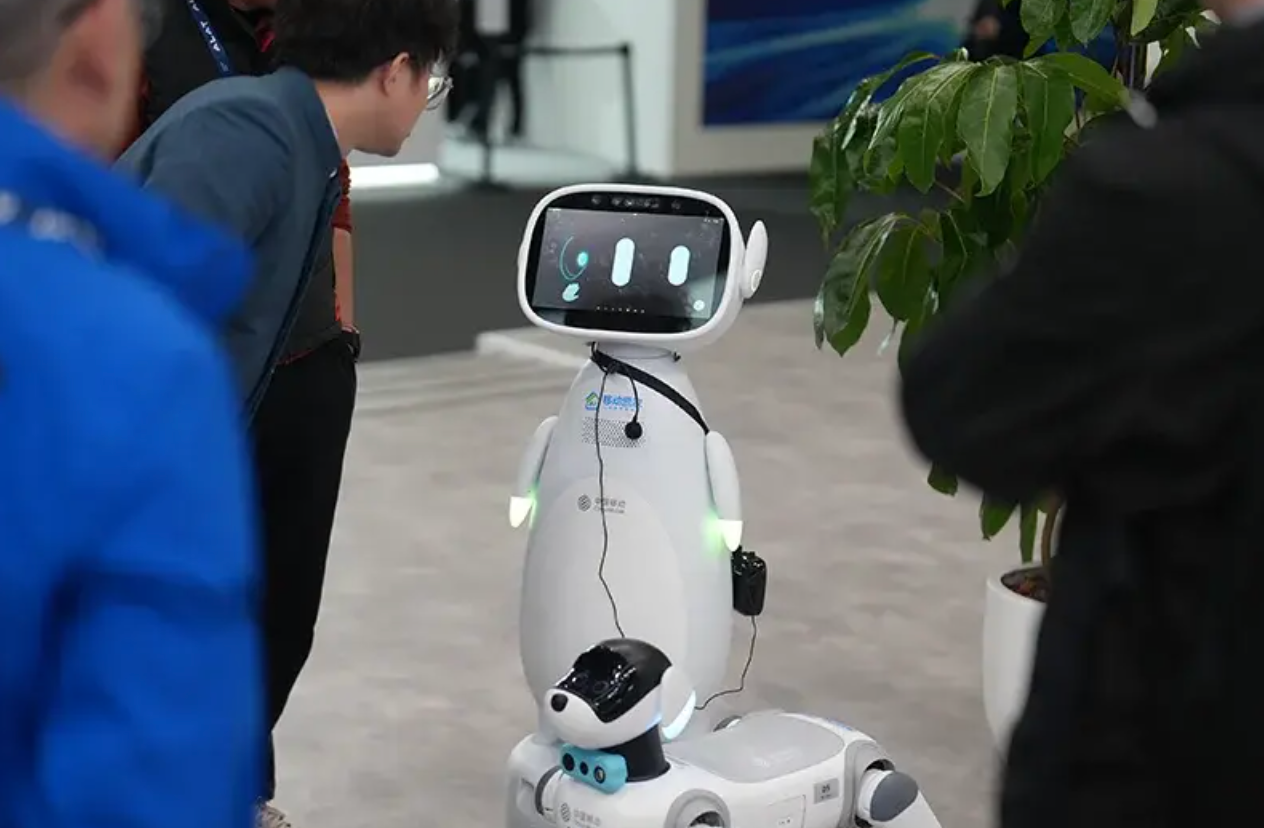
It would be easy to dismiss some of this as spectacle. But what's on the stands today will be in businesses within five years. Maybe even sooner.
AI discussions at MWC this year moved away from hype and towards enterprise-ready robotics and real value creation. I saw that everywhere.
AI is no longer a talking point. It's the foundation.
We’re clearly past the stage where AI is a buzzword. It's built into everything now: networks, devices, infrastructure, and aviation. Intelligent systems are being deployed in practical, commercial ways.
The conversations weren't theoretical anymore. They were about rollout, integration and execution. The shift from AI hype to real business models is already underway and walking the floor at MWC, that was obvious.
Qualcomm putting on-premises AI and 5G inside Siemens factories is a good example. That's already happening. AI is now foundational telecom infrastructure. Nobody is asking whether anymore, just how fast.
6G is part of that same conversation. It's not about speed. It's about intelligent data management at scale, and it's starting now.
The human conversation nobody expected
For an event built around technology, a surprising amount of it was about people.
Nataly Qarain said something that stuck with me. Employees aren't afraid of AI because of what it can do. They're afraid because they don't know where they fit anymore. Most businesses aren't addressing that, and they should be.
Daan De Wever put it plainly. The future relies on people and mindset, not technology and flashy displays. After four days surrounded by flashy displays, that was the most grounded thing said all week.
AI's potential is immense, but misuse threatens trust and requires responsible governance, Mulinge Sylvia pointed out. That's the conversation most organisations are still avoiding.
Human connection must remain central as we move into the 6G era. AI is moving from software to physical presence, to robots, to wearables, to the office. The closer it gets, the more the human questions matter.
What I took away
The companies already ahead aren't the ones with the biggest AI strategy decks. They're the ones who picked something specific, shipped it, and learned from it. As Paolo Pescatore observed on day three, the focus shifted to operationalising AI and building trust. Most businesses never get there.
Technology reflects our priorities, ambition and judgement. Strip away the stands, the launches and the demos, and that's what most conversations came back to. Where do we focus? What do we choose to build? Who do we choose to trust?
The ones who figure that out first will be very hard to catch.
Big thanks to IFLYTEK for the invite. My AI notes came in very handy.
.jpg)

.jpg)