
.svg)
The platform your agency was built on has been rebuilt underneath you
Search has changed three times since most agencies started selling it.
The first version was keywords. Simple intent matching. The agency optimised the bid, the list, and the landing page. Clear funnel. Clear value.
The second version was signals. Mobile, location, behavioural data. Smart Bidding absorbed the manual work. The skill set evolved but the underlying logic held. You were still optimising for known intent.
The third version is live now. Gemini handles natural-language queries before they become search terms. Users ask questions in conversation. The AI interprets, expands, and matches them to commercial intent before a specific query is formed. AI Max captures this. AI Brief lets advertisers guide it in plain language.
Each version retired the skills that won the version before it. Keyword optimisation became a commodity in version two. Bid management is being absorbed in version three.
The founders who see this clearly ask one question: what part of my proposition is the platform currently in the process of absorbing?
YouTube is now a performance channel. Most agencies missed it.
Demand Gen was the announcement most agencies will underestimate.
The pitch is straightforward. YouTube, Maps, and Search signals can now predict who wants your brand before they search for it. The AI builds demand among users who haven't shown explicit purchase intent. Then it converts them.
Someone watches running shoe reviews on YouTube, searches for marathon training plans on mobile, and checks local running clubs on Maps. They haven't searched for a brand. They haven't bought anything. Demand Gen identifies them as a high-probability customer and serves a relevant ad three days later. The intent didn't exist when the campaign started. The campaign created it.
This is a different category of media buying entirely. Traditional performance started with intent and optimised for conversion. Demand generation starts with prediction and manufactures intent that converts.
For agency founders, the strategic question is sharp. Are you selling "we'll run your YouTube ads efficiently"? That's an execution pitch competing on price. Or are you selling "we'll identify your next 10,000 high-value customers before they know they want you"? That's a strategic pitch competing on something acquirers actually pay multiples for.
The work also looks different. Demand Gen runs on creator-led content at scale. Agencies need genuine creator relationships, attribution models that capture upstream demand creation, and first-party data connected to the prediction engine. Most agencies haven't built this yet. The ones that have are charging significantly above market because the work is harder to replicate.
Agentic commerce removes the funnel your agency was paid to optimise
This is the announcement with the most long-term consequence.
Google's direction is clear. Research, discovery, and purchase inside a single Gemini conversation. The user never leaves the chat. Never visits the website. The funnel agencies were paid to convert becomes irrelevant if the customer never enters it.
The work shifts toward making the brand legible to the AI doing the buying. Rich product feeds. Structured data. AI Max for Shopping campaigns that surface inside conversations rather than on results pages.
For agency founders running e-commerce clients, this is the most significant shift since mobile. The customer journey you were paid to optimise, landing page, cart, checkout, retention, collapses into one interaction you don't control.
The defensible value now happens before the conversation starts. Product feed quality. Schema markup. The structured data that determines whether your client gets recommended inside a Gemini conversation, or invisible within one.
The agencies that recognise this and reposition early build expertise in a category that barely exists yet. The ones still optimising landing pages will spend the next three years watching their work get bypassed.
Creative production is becoming a commodity. The question is whether you are too.
Asset Studio is Google's bet that creative execution will be near-free by the end of 2026.
Multimodal AI generates ad creative inside Google Ads. Upload a product photo, a hero video, and a brand kit. The platform outputs dozens of localised variations in minutes. A 15-second YouTube ad becomes a 6-second Shorts cut, a square social version, a vertical mobile format, and a display banner. Copy adapts to placement. Visuals re-render to fit.
The volume of variations agencies used to charge for now gets produced automatically, often inside the client's own interface.
If you're pricing creative work by the hour or by volume, you're racing to zero. The value migrates upstream. Strategy. Brand systems. Creative direction. The judgment about what to test and why.
The agencies competing on production volume lose. The agencies competing on judgment win.
Measurement is where the premium work now lives
The fifth shift got the least attention and might matter most.
Google Analytics is becoming a unified data layer, integrating campaign data, business data, and marketing mix modelling into a single view. The pitch is causality, not just correlation. Brands can prove media effectiveness rather than just report on channel metrics.
This is the work that separates premium agencies from commodity ones. The founders who invest in building genuine analytical capability, causal measurement, unified data interpretation, structural recommendations, are operating in a category clients pay senior rates for. The ones still sending screenshots of channel dashboards are competing on price against tools that do it automatically.
The infrastructure now exists for agencies to do analytical work that used to require enterprise data teams. The question is whether you build that capability before your clients start demanding it.
What ties all five shifts together
One direction.
Google is collapsing the distance between intent, discovery, decision, and purchase into a single AI-orchestrated flow. Every announcement reinforces the same thing.
The work agencies were paid to do across that flow, keyword optimisation, manual creative, channel reporting, landing page conversion, is being absorbed into the AI layer.
The work that stays valuable sits above it. Positioning. Data architecture. Predictive demand modelling. Brand systems the AI can interpret correctly. Measurement that proves business impact.
For agency founders, this is a positioning question with a deadline. The agencies pitching execution compete with Google's own AI. The agencies pitching judgment, architecture, and structural advice compete with each other for the premium mandates.
What this means if you're building to sell
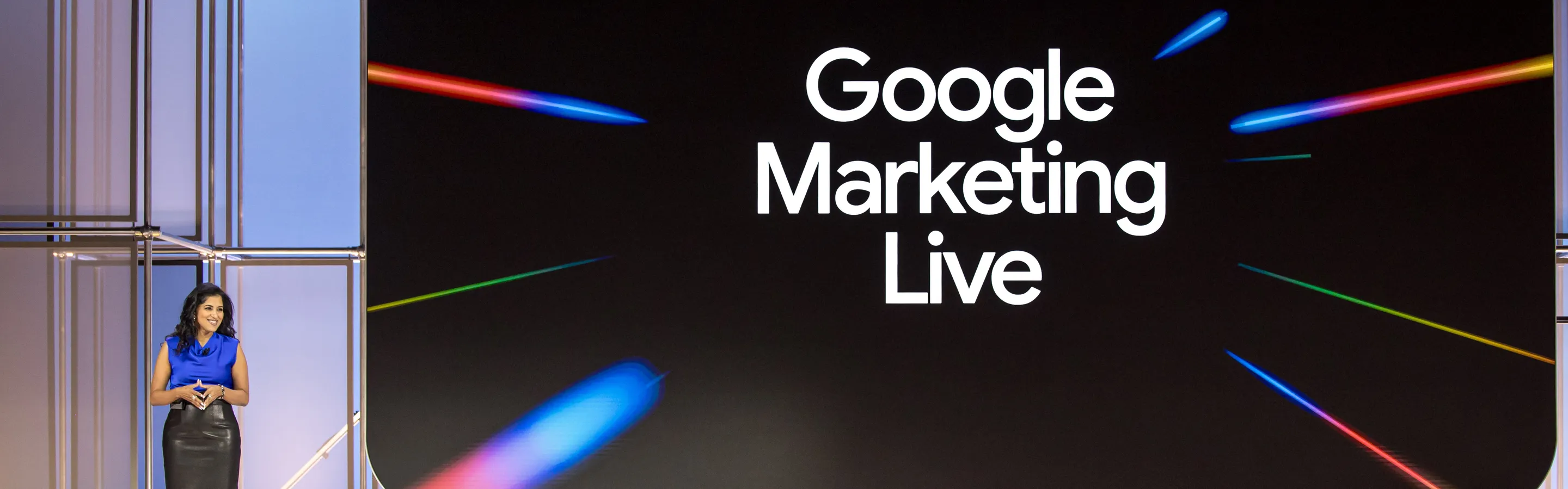
Google Marketing Live wasn't a feature announcement. It was a strategic signal about what agency value is worth in 2026 and what it won't be worth in 2028.
The pattern we see across the collective is consistent. The founders who adjust positioning in the first six months after a platform shift establish the premium category before their competitors understand what changed. The ones who wait reposition under pressure, with less leverage and worse margins.
Three years ago the shift was first-party data. Two years ago it was generative AI in creative. This year it's the AI orchestration layer collapsing the funnel itself.
The agencies that exit at the multiples acquirers pay for are the ones who moved the value of their work upstream before the platform made the move for them.
If you're still here, book a call. We'll walk through where your positioning sits against the shifts Google just announced, and what 18 months of focused repositioning could look like for your agency.
.jpg)

.jpg)